
Traveling through India is an experience that touches you at every level. From exotic destinations, food, culture, spirituality, and festivals, there is a never-ending list of things you can do.
With so many things to experience in this ancient land, it is hard to filter out the best elements for a 21-day India travel itinerary. And if this is a first-time visit, you should be ready to get overwhelmed. No matter what you have heard about the country, most destinations will take your breath away (and no, I am not talking about the pollution).
Now, 22 days is not too long but it is not super short either. But it is just not enough to cover every part of the huge country. You can spend 5 months in India and still not be able to cover every place. We have cherry-picked a combination of some well-known and lesser-known spots that will ensure a fantastic trip.
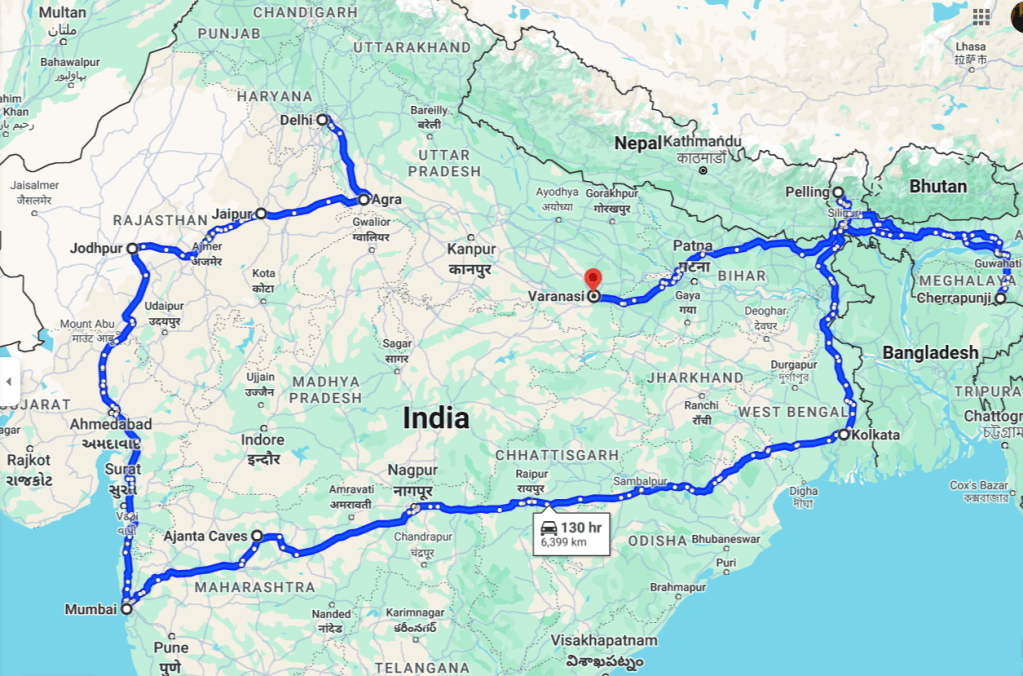
Yes, there can be other varieties of a 22-day India trip. But without a doubt, this one is one of the best India travel plans where you will be covering some of the top spots including the Golden Triangle.
Now the sights and sounds in these destinations will depend on the season you visit. So, let’s start with a quick breakdown of the seasons in India for a better understanding.

The Seasons in India
The Indian climate can be divided into four seasons, each with its charm. Remember that India’s climate is diverse, so always check the weather conditions for the specific region you plan to visit.
Winter (December – February)
During winter, the northern regions of India around the Himalayas, become chilly, while the southern parts enjoy milder temperatures. This season is perfect for exploring cultural heritage sites like the Taj Mahal in Agra or the forts of Rajasthan without the scorching heat. For travelers visiting the Himalayan region, it’s an ideal time for skiing in Gulmarg or Auli in Uttarakhand. Packing layers of clothing, including sweaters and jackets, is advisable for those heading to the northern states. In the south, the winters are milder.
Spring (March – April)
From mid-March to April, the season is spring and the flowers are in bloom. Tulips, rhododendrons, or palash- make your choice. It’s a popular time to visit India, as the weather is mild, and the festival of Holi takes place to welcome spring. The hill stations are still cold but the plains will start heating up by the end of March. By mid-April, spring is almost over and the summer heat starts scorching most of the land.
Summer ( April- June)
Summer in India is synonymous with intense heat, particularly in the central, western, and southern regions. The highest temperatures can easily touch 40°C or 104°F in the plains. However, the hill stations of North India, such as Shimla and Darjeeling, offer a cool retreat from the soaring temperatures. While traveling to cities like Delhi or Jaipur in this period, it’s essential to stay hydrated and wear light, breathable clothing. Exploring early in the morning or late in the evening can help avoid the heat.
Monsoon (July – September)
Monsoon winds from the oceans bring relief from the scorching heat but also heavy rainfall and humidity. Travelers should be prepared for sudden downpours, so packing waterproof clothing and the right footwear is crucial. Kerala, Goa, and the Western Ghats are particularly enchanting during the monsoon, with lush greenery and cascading waterfalls. On the other hand, landslides and floods can hinder your plans in some zones near the mountains.
Autumn (October – November)
The rains start to dry up from the first week of October as autumn marks the transition from monsoon to winter, offering pleasant weather across most parts of the country. It’s an excellent time for outdoor activities such as wildlife safaris in national parks like Kaziranga, Ranthambore, or Bandipur. Some of the most colorful festivals like Diwali and Durga Puja are celebrated during this season, providing a glimpse into the country’s rich cultural heritage. Travelers should pack lightweight clothing and comfortable walking shoes for sightseeing adventures.
Traveling to India: Points to keep in mind
Here are some important points that you need to keep in mind while following this itinerary
- This itinerary is meant to be a guideline. Feel free to customize it to meet your travel needs. You can make it more relaxed by spending more time in one spot. However, you will need at least 21 days to cover all the spots mentioned here.
- You will find cabs in all the cities in India for local sightseeing. For intercity travel, trains are flights are the best options. Another great option is to pick sleeper buses that travel between cities. You can also book intercity cabs for long-distance trips from car-hire agencies, especially in Rajasthan and the eastern parts of the country.
- It is not possible to list all the attractions of the spots mentioned in this article. I will link to various resources for local sightseeing options.
- The rainy season is not the best time to travel to the mountains and heavy rains can cause sudden landslides. Also, the major National Parks remain closed during this period. The coastal areas may experience rough seas, so checking weather forecasts and travel advisories is advisable.
- Your packing needs will vary depending on the season and the locations. You may feel the heat in Mumbai, but shiver in the mountains of Sikkim. Check the weather conditions before you start for a better idea.
- Some sites remain closed on National holidays, and you may not find local conveyance readily on those days.
The 22-day India travel itinerary
Day 1,2 and 3
Delhi- The first two days will be spent around the city of Delhi when you arrive. After arrival, spend the first day visiting some of the historic sites around the city. On the second day, walk around old Delhi’s maze and check out some of the popular culinary delights for the foodies.

Agra- Take a train or bus at the end of the second day to reach Agra to visit the – you know what -Taj Mahal. If this is close to a full moon night or somewhere around it, do not miss the night views of the Taj.

Days 4,5.6,7 and 8
Jaipur- On the 4th day, travel to the city of Jaipur in the state of Rajasthan. In the afternoon, visit the majestic city palace. The next day, hire a ride to Chand Baori at Abhaneri to view the incredible step well and come back to Jaipur.

Jodhpur- On day 6, head to the blue city of Jodhpur. The next day, start early and head for the magnificent Jain temple at Ranakpur. Next on the list is a visit to the fort of Kumbhalgarh, also known as the Great Wall of India. You will be back to Jodhpur by evening to enjoy a walk in the vibrant streets. On day 8 you are free to visit the sites around Jodhpur, like the palace and the palace.

Days 9, 10, and 11
Mumbai- On day 9, take a flight from Jodhpur to reach Mumbai. Spend the rest of the day visiting the India Gate and exploring the fabulous street food. If you are here during the rainy season, spare a day to drive around the Malshej Ghat to enjoy the wonderful landscape.

Aurangabad- On day 10, take a train to Aurangabad and spend the night there. The next day, you will be visiting the stunning Buddhist rock temples of Ajanta and Ellora, which are UNESCO World Heritage sites. You will remember the rock sculptures and murals in the caves for a long time.

Days 12, 13, and 14
Kolkata- On the 12th day you can start a journey to the eastern end of the country by taking a flight to the city of Kolkata from Aurangabad. In the evening, head out to taste some of the special sweet delicacies that the city is famous for. If you are here in October, check the timings of the Durga Puja festival, an eye-popping religious and cultural extravaganza. However, you will need at least one extra day for that.

Pelling- The next day, it is time to head for the mountains. Catch a flight for Bagdogra from Kolkata and hire a cab to reach Pelling in the beautiful Himalayan state of Sikkim. Pelling is a charming hill station that provides some of the best views of Mount Kanchendzongha, the third-highest peak in the world. The ideal season for the best views is from autumn to spring. Spend the next day visiting orange gardens, and waterfalls, or simply relax with a cup of Himalayan tea.

Days 15, 16, 17, 18, and 19
Guwahati– On day 15, head back to Bagdogra to catch a flight to Guwahati to discover the lesser-known eastern corners of India.
Sohra (Cherrapunji)– Spend the night in Guwahati and head for Sohra the next morning. This is one of the wettest places on earth and in the rainy season, you will find numerous waterfalls cascading down the mountainsides. Spend a day exploring the best waterfalls and underground caves in Sohra. The next day, head for the living root bridge built by the Khasi tribe in Mawlynnong, the cleanest village in Asia. You will drive to Kaziranga National Park and Tiger Reserve on the same day.

Kaziranga– This National Park is a UNESCO World Heritage site and has the highest density of Indian one-horned rhinoceroses. Go for an evening safari in the forest to view the wildlife. Go for an early morning elephant safari the next day to another section of the park. You can book the safari tickets online. Note that the park remains closed between May and October. Drive back to Guwahati on the same day and spend the night there.

Days 20 21, and 22
Varanasi (Kashi)- Catch a flight from Guwahati to reach the city of Varanasi– one of the oldest cities in the world and the spiritual center of India since time immemorial. A word of warning though– this city can take not just your breath but your heart away too. It will take days to explore this city of temples and all its attractions. We recommend at least two nights of stay to visit the main attractions. I suggest three must-dos- go for an evening boat ride, watch the Ganga Arati, and visit the museum at Sarnath.

Rishikesh (optional)- Rishikesh is a great option if you cannot visit Kaziranga due to the timing. Catch a train from Varanasi to Dehradun and take a cab to reach this holy city located on the banks of the Ganga River. You can participate in adventure activities like rafting and cliff jumping, or just relax in the serene setting.
Delhi- On day 22, take a flight or train from Varanasi to Delhi. Your India trip comes to an end here.
FAQs
What is the best way to travel around India?
The best way for inter-city travel in India is on trains. However, for longer distances, flight journeys will save you time.
How to plan a budget trip to India?
For a budget trip to India use local conveyance and stay in hostels available in most major cities. Also, avoid traveling around the festival season and the vacation periods when the ticket prices are high.
Where is the Golden Triangle in India?
The three cities in north India, Delhi, Jaipur, and Agra, form the golden triangle of tourists. Some of the major attractions of the region are around these three spots.
Where should I start traveling to India?
You can start traveling to India from any corner of the country. Generally, Delhi and Mumbai are the popular cities where most tourists start their trips. Or else, you can start from Bangalore, Chennai, or Kolkata. Look for the cheapest flights to the major cities.
Hello fellow travellers! If you found this Malta travel guide helpful, please leave a comment. That helps.
By Suvajit Banerjee
© teleratz.com 2024
 Teleratz