

Is there any other religious event in the world that is grander and more awe-inspiring than Durga Puja in the city of Kolkata? Not really.
That might sound like an exaggeration. But consider this.
Fact one. This five-day-long festival brings a city with a total population of around 15 million to a state of celebration and excitement like nothing else. In reality, the festivities get extended by almost 7 days as the city is reluctant to return to normal after the five-day-long euphoria.
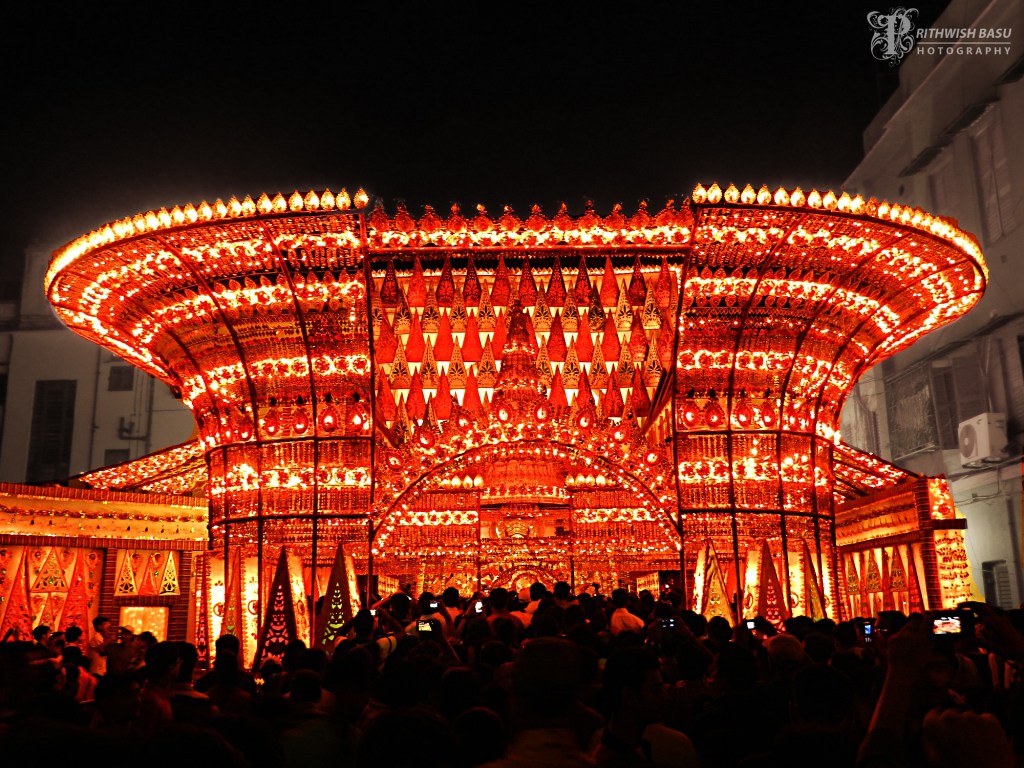
Fact two. The religious event has turned into a cultural festival, transforming the city of Kolkata into a giant cultural pavilion in this period. With innovative lighting, intricate decor, food stalls, and beautifully crafted pandals or pavilions many of the pujas will make you believe that you have stepped inside an art museum. And there are hundreds of them to explore. The atmosphere is electric and the festive feel is palpable.
Fact three. The actual puja or worship process is one of the most elaborate events in the Indian tradition and is often compared to the complexity of the ancient Vedic yagnas. Each ritual of Durga Puja has in-depth significance and the preparations need to be meticulous.
Fact four. The oldest Durga puja in Bengal dates back to 997 CE and continues. It was started by then-king Jagat Malla of Bishnupur. At present around 3,000 pujas are organized in the city of Kolkata and around 40,000 in the state of West Bengal.
While these facts are significant, they convey as much of the scale and grandeur of the event as a poster does of a movie. Being a tourist in Kolkata during the event of Durga Puja is an experience of a lifetime, especially if you have never been exposed to the majesty of Indian festivals.
But be warned. Witnessing an event of this magnitude can be stressful for your jaws. They may drop frequently without warning.

What is Durga Puja celebrated for – The History
The history of worship of the female deity in India considering it to be a reflection of Maha Shakti, is as old as the country itself. As per the ancient texts of India, by following the right methods of worship a devotee of the Goddess can be blessed with immense well-being- both material and spiritual.
Tracing the origin of the Goddess can be complex as there are many historical and textual references to draw from. Beyond West Bengal, there are other forms of Goddess Durga worshipped in various parts of India.
Various forms of the Mother Goddess are worshipped and the origin of the deities find their source in various religious texts, mainly the Puranas. One text that is considered one source of Devi Durga, is the Sri Sri Chandi, which in itself is a part of the Markandeya Purana.
The text of Sri Sri Chandi describes the nine forms of the Goddess and each of these forms has different tales associated with their origins. Each of these nine forms is worshipped as a part of the auspicious nine-day-long period of Navaratri in India. The Durga Puja is conducted on five of these nine days and is concluded on the 10th day (Vijaya Dasahmi). This day is equivalent to the Dusshera festival conducted all over India on that day.
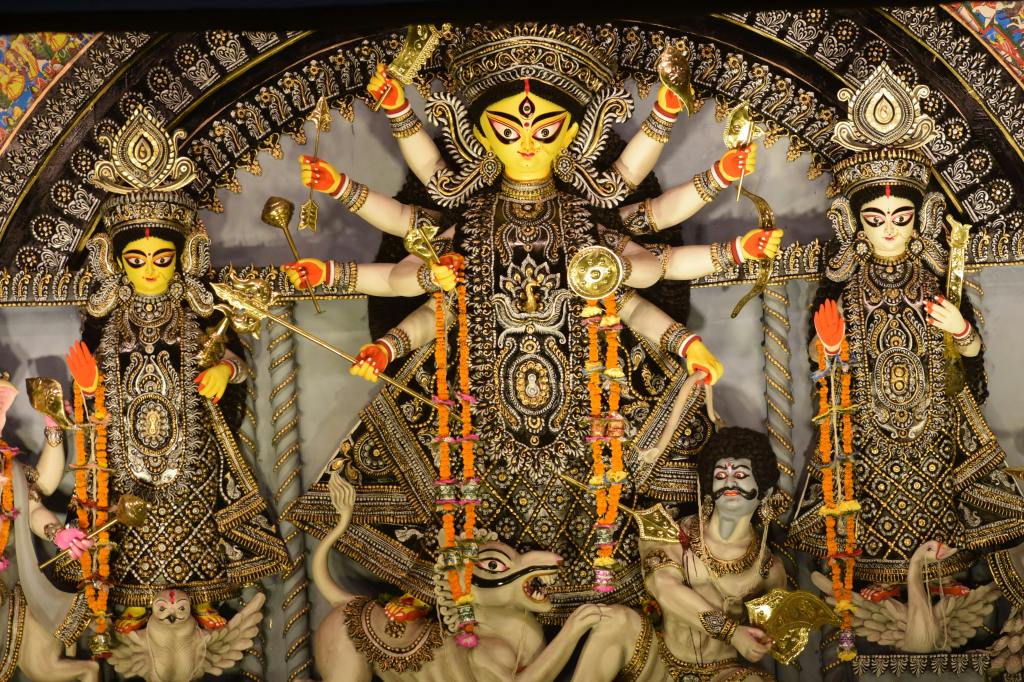
In the form of Durga, the goddess is the destroyer of the demon Mahishashura. There is an elaborate description of how each devata or god contributes their powers to create the form of the Goddess and her weapons. However, the deeper reality is that the Goddess herself is the root of all their powers.

Originally, this puja was supposed to be conducted in spring or basanta. However, Lord Ram worshipped the Goddess before engaging in battle with the demon king Ravana in the season of sarata or autumn. Thereafter, the puja is conducted in this period (months of Late September- October) and is called akal bodhan.
In every idol of the Goddess, you will find the presence of the demon as he is included in the rituals of worship. That might make you wonder, why the villain is a part of the Goddess worship.
Interestingly, another text, the Kalikapuran, offers an insight into this tradition. Mahishashura was supposed to die at the hands of a woman, and he had a vision of being killed by the Goddess. Being a devotee, he surrenders to the Goddess, accepts death at her hands, and asks for a boon. He requested a share of the offerings offered to Devi as a part of the worship.
Unable to grant that request due to specific reasons, Devi said that as her worship continues, he will remain a part of that. Then she makes him forget this whole episode so that he can battle her without hesitation. Mahishashura was killed by her on the day of Vijaya Dashami.
The puja is also considered a home visit of Goddess Parvati to the plains from her husband’s abode in the Himalayas. The Mother is accompanied by her four children who are also worshipped along with her. The legends about her marriage with Lord Shiva are another unique tale that you can try reading.
How to Plan For a Durga Puja Trip to Kolkata
Without a doubt, this religious event is an integral part of Kolkata tourism. Durga Puja usually falls within the first half of October, but the exact dates may vary by a few weeks based on the lunar calendar. While preparing a Kolkata tour plan, book in advance as finding rooms in the hotels of the city can be tough during this period.
For visiting the pandals, follow a guide map – the map published by Kolkata police is a good option. Other than traveling on your own you can also book a trip from the West Bengal tourism department that takes you around the city and some of the most famous pujas.
My advice: pick the hours between 2 pm and 6 pm to visit the various pandals. The crowd is the densest between the evening hours and you will have to wait for hours in long queues and walk through crowded streets, which can be tiring.
There are private pujas held across some households, especially in families with a long tradition and those with a royal heritage. Some houses make these events accessible to the public and they are unique in their ways.
However, the actual grandeur lies in the general pujas organized by various clubs. There are various awards given for the best pujas and the competition is on to get more creative with the design. From eye-popping decor to unique ways of designing the idol of the Goddess, these pujas attract heavy crowds during these five days.
While traveling on your own, remember that the city will be chock-a-block these five days, and communication can be an issue. Riding a vehicle during the prime hours is not a good idea. The best idea is to walk and cover the different areas on different days. Using the metro railway network is a good idea, but it remains packed too.
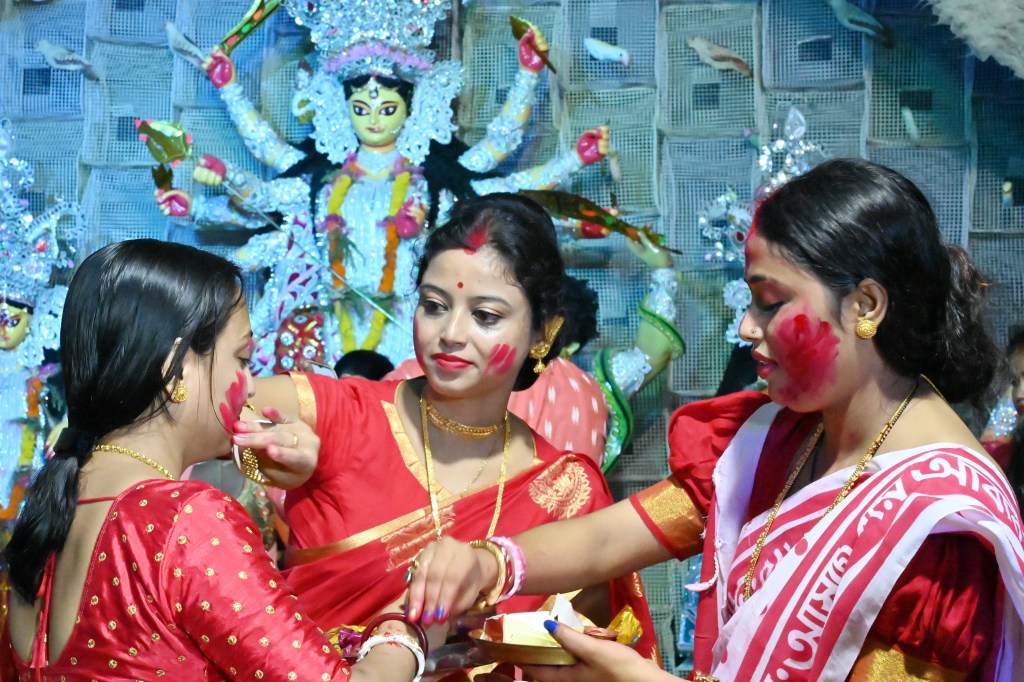
Perhaps jostling through the crows is not fun for you. Then you can stick to a single para or neigbourhood and observe each aspect of the puja from close quarters. Enjoy the rhythm of the dhak, the offering of arati, and the other cultural aspects of the celebration.
Lastly, join the bisarjan or immersion of the goddess at the end of the puja during the night of Dashami. The idol is taken into the river Ganga and immersed in the water, a poignant scene as it is considered as the departure of a daughter from her home. But that does not stop the celebrations as Dashami marks the start of the mental preparations for the event in the coming year. After all, asche bochor abar hobe (it will happen again next year).
To Conclude
The worship of the divine feminine on such a grand scale is unique in this part of the globe. From the making of the idols to preparations for the event and then the final days of the event, each stage is an integral part of the Bengali culture.
Quite simply, witnessing this majestic religious festival is an experience of a lifetime. If you want to witness only one grand religious event in life, the Durga Puja in the city of Kolkata should be it.
By Suvajit Banerjee
© 2024 teleratz.com
 Teleratz