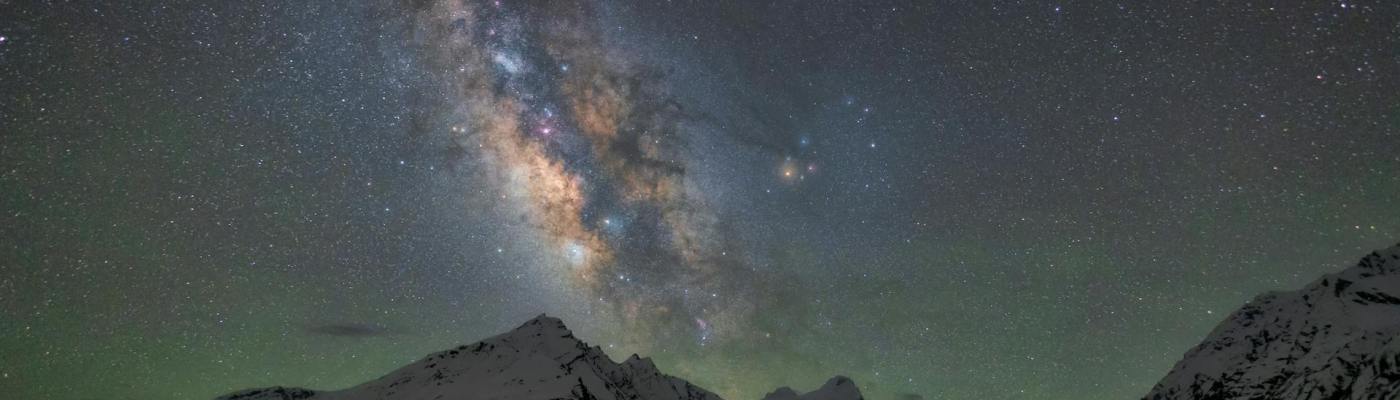
Being an urban dweller from my childhood, I was not fully aware of the magical beauty of the night sky till my early twenties. Then one night in a remote village in Sikkim, I remember being stunned by the splendour of the Milky Way. That was the first time I realized what drew the human race, from our caveman ancestors to modern-day astronomers, towards the mysterious and magical glow of the dark sky.
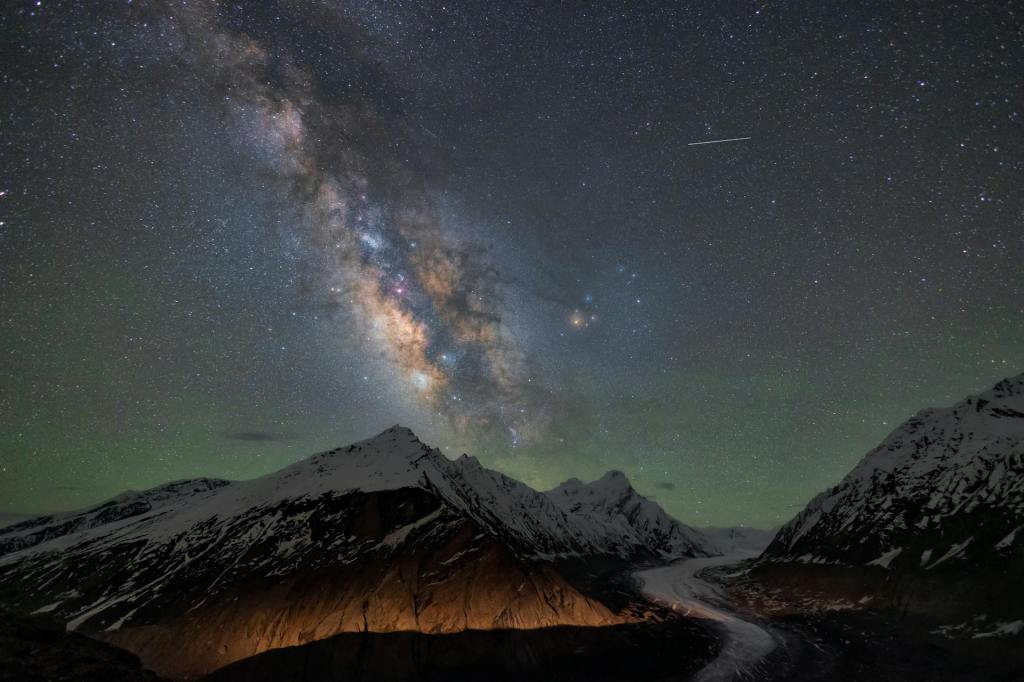
Over the last decade, astrotourism in India has evolved at a rapid rate, and the Hanle Dark Sky Reserve was the first destination to draw the interest of tourists. After that, multiple locations across the Himalayas, the deserts in western India, and multiple remote villages and beaches have come under the astro spotlight.
Here are 9 top dark sky destinations in India that are great locations for stargazing. While there are many other spots for night sky photography in India, these locations will not disappoint you if you pick the right season.
1. Hanle, Ladakh – India’s First Dark Sky Reserve
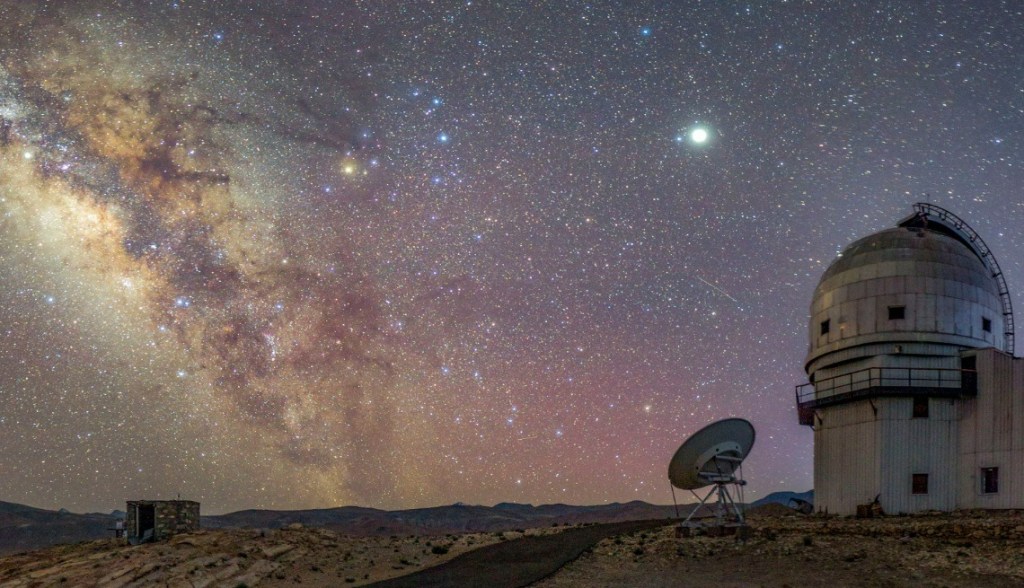
Hanle is arguably the premier destination for astrotourism in India, primarily because it hosts the Indian Astronomical Observatory (IAO). The village was recently designated India’s first Dark Sky Reserve, thanks to its “one” rating on the Bortle Dark-Sky Scale.
Hanle has become an extremely popular destination. Recently, due to limited capacity, homestay owners had to turn away tourists during the summer. The village actively works to mitigate light pollution, making it a perfect spot for serious astrophotographers and researchers. Plan your trip during June-September to avoid the harsh winters.
Located in the cold desert of Changthang at an elevation of about 4,500 meters (14,800 ft), the terrain around Hanle is fascinating. Its altitude, arid climate, and extreme remoteness ensure some of the clearest, darkest, and driest skies globally. This site is in the rain shadow of the Himalayas, meaning it experiences minimal cloud cover for over 260 nights a year. After visiting Hanle multiple times, I have to say that the views of the Milky Way and other galaxies from here are unparalleled.
Travel Information:
- Nearest City: Leh. Hanle is approximately 270 km from Leh, requiring a drive of 9-10 hours.
- Getting There & Staying: Hanle requires an Inner Line Permit (ILP) for visitors. The journey from Leh should include an acclimatization stop at a lower altitude location like Chumathang or Nyoma. Accommodation is limited to homestays, which offer mostly basic facilities but are warm and comfortable.
2. Spiti Valley, Himachal Pradesh – High Altitude, Crystal Clear Skies
With a climate and arid terrain somewhat similar to Ladakh, Spiti Valley is a high-altitude cold desert. Its elevation, dry environment, and sparse population contribute to skies virtually free of light and air pollution, making it a top clear sky destination in India.
Kaza, Kibber, Hikkim, and Komic are some of the best destinations for high-altitude stargazing in India. In January this year, a stargazing facility was inaugurated in Kaza. Two Sky-Watcher BKDOB 8″ Collapsible GOTO telescopes were given to local beneficiaries for arranging night sky observation sessions.
In fact, homestay and hotel owners will be included in this community-driven program. If you can withstand the harsh conditions, the winter months of November to February are best for stargazing. However, the period between May and September is also a good time for celestial observation.
Travel Information:
- Nearest City: Manali or Shimla. Kaza is the sub-divisional headquarters. The Manali-Kaza route (open only in summer) is shorter (approx. 200 km), while the Shimla-Kaza route (open year-round) is longer (approx. 420 km).
- Getting There & Staying: The journey involves traversing high mountain passes, and a shared taxi or private vehicle is necessary from Manali or Shimla. Staying options include guesthouses, hotels, and traditional homestays in villages like Kaza and Kibber.
3. Nubra Valley, Ladakh – Stars Above the Sand Dunes
The Nubra Valley, famous for its unique cold desert landscape and double-humped camels, offers another exceptional stargazing experience in Ladakh. Located at an altitude of over 3000 metres, the low humidity and pollution levels make the valley a great spot for astro-tourism.
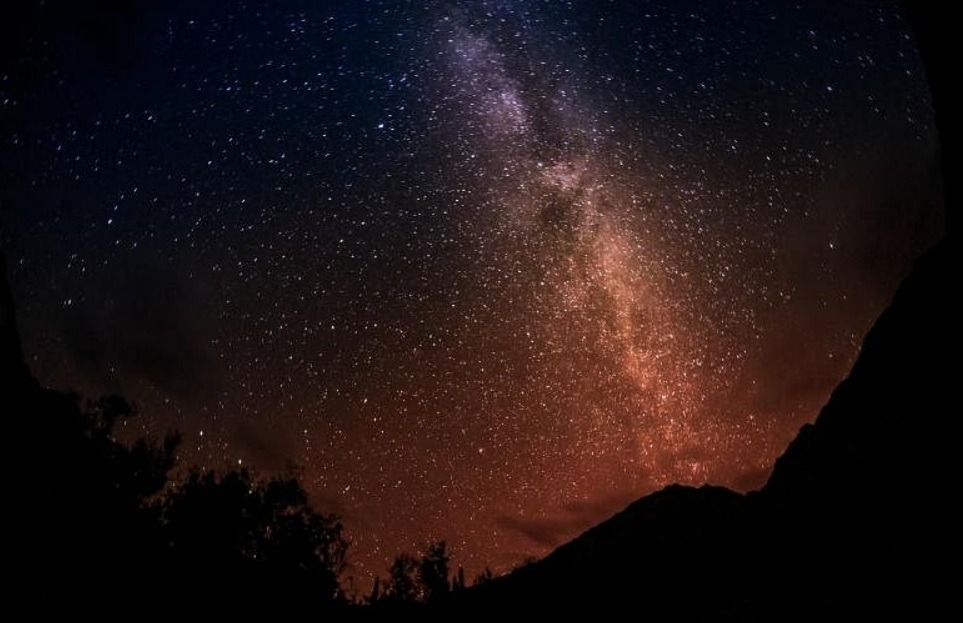
The valley’s wide-open vistas, particularly around the Hunder and Diskit areas, provide a low-light-pollution environment perfect for viewing the cosmos. The unique foreground of dunes combined with the brilliant night sky creates a dreamlike setting for astrophotography.
Plus, the ancient astronomy traditions related to Buddhism give the experience a rich cultural background. The best time to visit is between the months of April and October.
Worth mentioning that there are other locations in Ladakh that offer great opportunities for astro photography. For example, I have observed some of the best night skies from the remote villages of Zanskar.
Travel Information:
- Nearest City: Leh. Nubra Valley is about 150 km from Leh and is accessed via the Khardung La pass (one of the world’s highest motorable roads).
- Getting There & Staying: An Inner Line Permit (ILP) is mandatory. You drive from Leh via Khardung La. Accommodation includes a wide range of options from luxury camps and resorts to comfortable homestays and tented camps near Hunder and Diskit, often catering specifically to travelers.
4. Rann of Kutch (Great), Gujarat – Endless Horizon Under a Star-Filled Sky
The vast salt plains of the Rann of Kutch are not only surreal, but also under one of the darkest skies in India. In winter, the salt plains turn into an uninterrupted 360-degree horizon, and with minimal light-polluting sources, the sky feels incredibly close to the ground.
Most of the sites are rated class 3 and, at times, class 2 in the Bortle dark sky scale. I have seen views of the Rann’s night sky that can match those in Changthang and Zanskar valley in Ladakh. You may have to wait for the Milky Way to climb up in the sky for the best shots.
Note that the cultural festival of Rann Utsav takes place every winter. The best stargazing sites are beyond the main festival area, and the views are best during moonless nights or the new moon phase. The dry and dust-free air of the salt desert enhances the clarity of the sky. Another spectacular aspect is the reflection of the starlight on the white surface of the Rann.
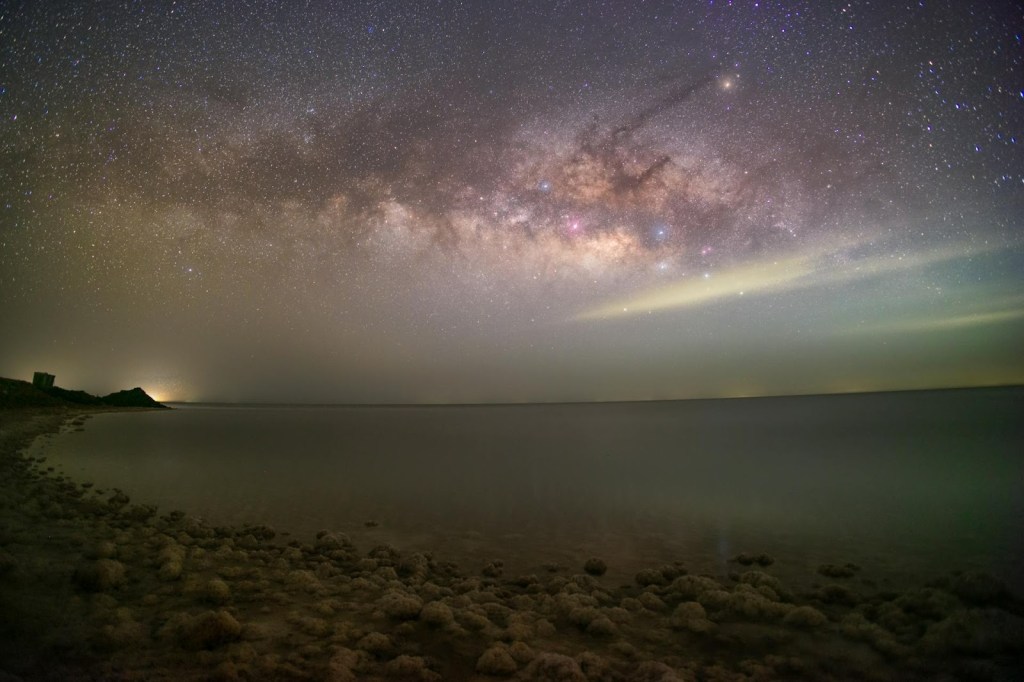
The White Rann (Dhordo Region) is the most accessible and popular destination for stargazing. Other spots like Kala Dungar, Dholavira, and Kadiya Dhro are also great options for observing the constellations and the Milky Way. Plus, the rich cultural heritage of the Rann adds to the overall experience.
Travel Information:
- Nearest City: The Rann is approximately 80 km from the nearest city of Bhuj.
- Getting There & Staying: You can hire a cab or take a bus from Bhuj (which has an airport and railway station). Accommodation options are varied but primarily in tent cities and resorts built for the Rann Utsav, or traditional Kutchi Bhungas (circular mud huts).
5. Coorg, Karnataka – Forested Hills With Minimal Light Pollution
Coorg (officially Kodagu) in the Western Ghats is a notable astrotourism spot in Southern India. While not as remote or high-altitude as the Himalayan sites, the light pollution is surprisingly low in certain pockets of the hilly belt. The reasons are the dense coffee and spice plantations and restricted development in key areas.
The main advantage of Coorg is its accessibility and its unique combination of dark skies with the lush, green, misty hills. It is gaining recognition, with dedicated private observatories setting up shop in the quieter, outer zones of the district. Locations like the Tadiandamol Peak, Madikeri, and the historical Nalakanad Palace are some destinations for telescope viewing and guided astronomy sessions.
November through February is the best period for stargazing in Coorg. However, keep an eye on the local weather updates to ensure clear skies.
Travel Information:
- Nearest City: Mysore (120 km) or Mangalore (160 km).
- Getting There & Staying: Coorg is best reached by road via cab or bus from Mysore, Mangalore, or Bangalore. Accommodation is plentiful, with an emphasis on nature stays, including colonial-style plantation resorts, cozy homestays, and luxury cottages.
6. Jaisalmer, Rajasthan – Desert Skies and Zero Cloud Cover
The golden city of Jaisalmer, located deep within the Thar Desert, is famed for its majestic Golden Fort and vast, arid landscapes. For the best night sky views, head to the areas deep in the desert, like the Sam Sand Dunes, Khuri Sand Dunes, and the Kuldhara village.
The exceptionally clear night skies are due to the desert’s geographical characteristics and low humidity, limited rainfall, and the significant distance from major urban centers. In the autumn and winter months, there is almost zero cloud cover, and the dark skies complement the desert landscape.
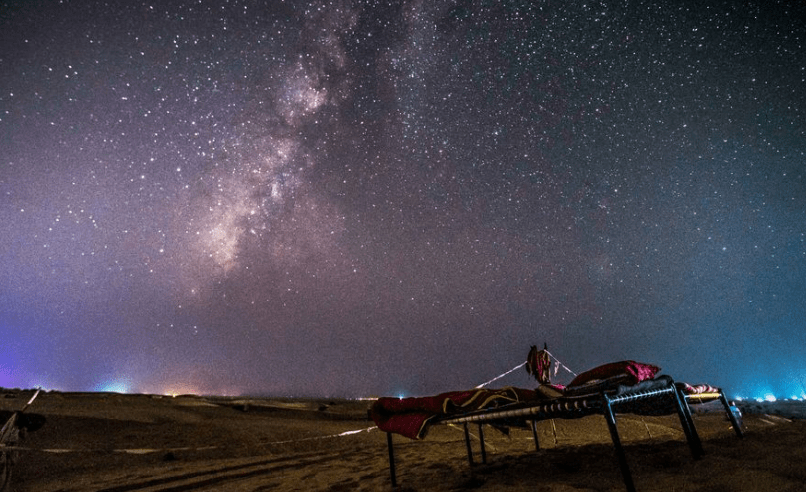
Apart from astrophotography workshops, telescopic viewing of Saturn’s rings and Jupiter’s storms is also possible. Besides, astrotourism in Jaisalmer combines experiences like desert safaris and cultural evenings.
Travel Information:
- Nearest City: Jaisalmer city. The Sam Sand Dunes are about 45 km from Jaisalmer city.
- Getting There & Staying: Jaisalmer has its own railway station and airport. You can hire a jeep or taxi from the city to the dune areas. Staying options range from luxury desert camps (tents) and budget desert resorts to heritage hotels and havelis inside and around Jaisalmer Fort.
7. Talacauvery, Karnataka – Picturesque Landscapes and Starlit Skies
While many astronomers visit Yercaud and Kodaikanal, a lesser-known destination is attracting the astral limelight. Talacauvery, the origin of the River Cauvery, is a pilgrimage site in the Brahmagiri hills in Kodagu district and is being considered as the “South Indian Hanley” by astronomers. Enthusiasts from the Bangalore Astronomical Society (BAS) have been holding star-gazing sessions in the location for some years.
The skies around the area remain mostly clear during winter, and being a rural belt, the light pollution is minimal. The period between December and February is best for astronomical observations. Talacauvery has an altitude of 1276 meters above sea level, which helps in these observations. Experts have classified its skies as two on the Bortle scale.
Travel Information:
- Nearest City: Mangalore (135km) or Coorg(43km).
- Getting There & Staying: It is accessed by road, primarily from Coorg or Mangalore. Arriving from the Kannur International Airport in Kerala is another option. Accommodation is available in hotels and homestays that cater to nature enthusiasts
8. Neil Island (Shaheed Dweep), Andaman & Nicobar – Stargazing by the Sea
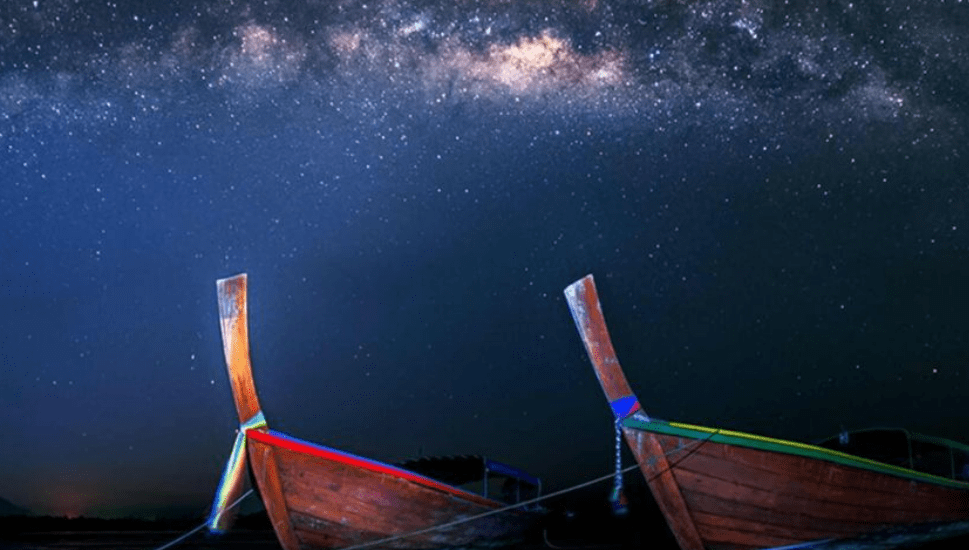
Neil Island, now officially named Shaheed Dweep, offers a rare coastal astrotourism experience. As a small, laid-back island far from the light pollution of mainland India, the skies above the tranquil beaches are surprisingly dark.
The opportunity to view the stars and constellations from a beachside location with the sound of the ocean is a unique draw. The best choice is to pick a beach that is facing away from the light of the island’s settlements.
Standing on the wide open beach of the island under the canopy of stars and galaxies is a magical, and often a meditative experience for many. The open beachscape is perfect for observation and photography. Avoid the rainy season from May to October as the skies do not remain clear.
Travel Information:
- Nearest City: Port Blair (the capital).
- Getting There & Staying: First, fly to Port Blair, then take a private or government ferry (60-90 minutes) to Neil Island. Accommodation ranges from mid-range resorts and beachside huts to budget guesthouses, often located near beaches like Bharatpur or Sitapur.
9. Mukteshwar, Uttarakhand – Starlight on Snow-covered Peaks
Mukteshwar, a small village with stunning views of Himalayan peaks, is a charming Himalayan hill station. Located at an altitude of approximately 2171 metres, Mukteshwar is free from light pollution. It falls in the Class 3 category in the Bortle Scale, making the night sky quality great for astro observations. For me, observing the stars shine over the towering Himalayan massif was a special experience.
The Uttarakhand Tourism Board has been developing a cluster of astro villages around the state to attract stargazers from India. The best period is through autumn and winter, until the summer rains start. In fact, Benital near Karnaprayag has been marked as India’s first Astro village. While there are a large number of stargazing locations in Uttarakhand, Mukteshwar has the advantage of having all the necessary facilities for tourists.
Many homestays and eco-stays in the area are highlighting night sky observation as a prime activity for tourists. The Aryabhatta Research Institute of Observational Sciences (ARIES) near Nainital has played a significant role in popularizing astro-tourism in the area through its outreach program.
Travel Information:
- Nearest City: Nainital, a popular hill station in Uttarakhand, is approximately 50 kilometres away. The drive takes around 2 hours.
- How to reach- You can drive from the nearest airport of Pantnagar or the railway station of Kathgodam. There are plenty of staying options that you can pick from, including ones in nearby villages like Satkhol.
Essential Tips for Stargazing in India
From community initiatives in Himachal Pradesh to the training of astro-tourism guides across villages in Uttarakhand, multiple projects are being undertaken in various states to promote astro-tourism. Companies like Starscape have come up to help tourists experience the wonders of teh night sky.
Founder of Starscapes, Mr. Ramashish Ray, mentioned in an event, “We’re not just training individuals, we’re creating a community of astronomy advocates who can lead local tourism with pride and purpose.”
It is important to prioritize your comfort and safety before visiting any of the best stargazing spots in India. Here are a few tips to enhance your experience.
- Plan your trip to any dark sky destination in India around a new moon. The period around the full moon is too bright for a clear observation of the night sky. Also, check the weather before planning a stargazing experience.
- The best time for stargazing in India is during the autumn and winter months. However, the climate in high-altitude destinations is extreme during the winter months.
- For a comfortable experience, carry a blanket, a mattress, or a camp chair. Sitting or lying comfortably will help you focus on the sky for long hours.
- While traveling during dark nights, use red lights to preserve your night vision. It is best to avoid bright flashlights as the high lumens can disrupt the stargazing experience for others.
- You do not have expensive telescopes for astroviewing. Even small binoculars can help you observe the dark spots of the moon more clearly.
- In case you are not accompanied by a guide, apps like Stellarium or SkyView can help you recognize stars and constellations.
- Most stargazing locations in India have a pristine environment. Keep the area clean, make sure to support eco-friendly initiatives, and avoid using plastic.
By Suvajit Banerjee
© 2025 teleratz.com
 Teleratz