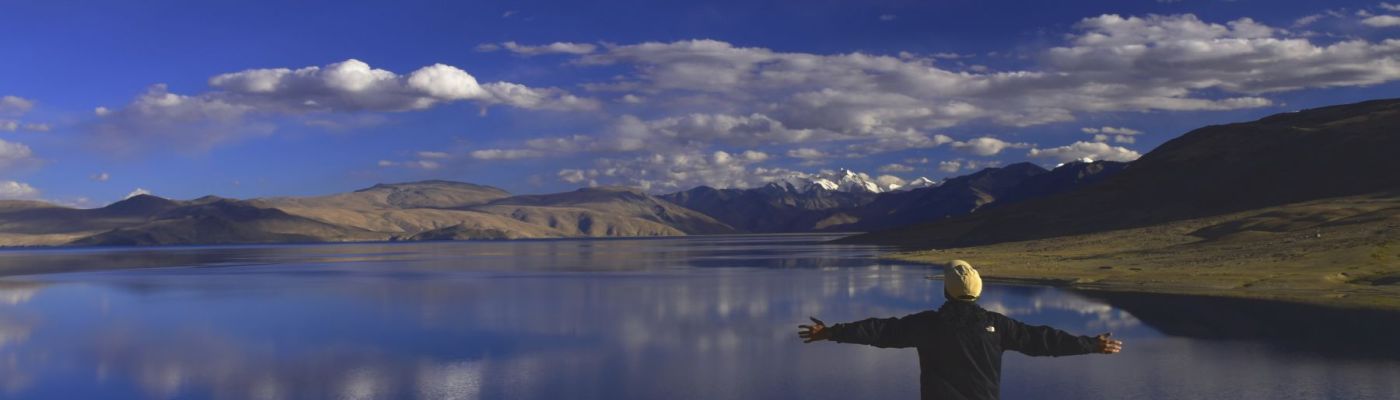

The chains that modern life has bound us with are getting heavier with each step. The more we direct ourselves to achieve the personal and professional goals that we set, the further it pushes us apart from our true nature.
Let’s admit it. At some point in our lives, all of us desire to take a vacation to a land where we can just shed our ties and simply be one with the unspoiled grandeur of nature.
Think of a place where nature overrules one’s senses with its sheer raw beauty. A destination where we can relax in peace, soak in the tranquil atmosphere, breathe in the pure air and look up at the millions of twinkling lights in a clear night sky.
Now add into it the thrill of adventure and the journey over roads that make you want to travel on them forever. If this sounds like a good plan to execute, you better arrange to take a few days off, make a good plan and pack your bags for a trip to Ladakh.
But hold on.
In case you have formed your opinion about Ladakh by watching the Three Idiots and desperate to catch a glimpse of Pangong Lake and come back, I will have to warn you that things are not so easy here.
Honestly, Pangong Tso is the jewel in the crown of Ladakh without any doubt. But the jewel does not make the entire crown. To enjoy the beauty of the entire crown, you need to take your time, plan properly and not think in terms of a whirlwind trip.

If one arrives in Leh by a flight, it is not recommended to start travelling and cross passes above 5000 meters within two days. The very high altitude of Ladakh is not something to be taken lightly. Neither can it be tackled only through doses of Diamox or cans of alcohol as some people often think.
In truth, sitting in a car with a thumping headache while waves of nausea sweep through the body is one of the most unpleasant experiences while into a trip in such altitudes. High altitude sickness can have other serious consequences and quite often it has different effects on different people.
Make no mistake about it. Any trip in Ladakh has to be planned in a way that allows the body to acclimatize properly and naturally. In reality, the time to acclimatize varies from one person to the other.
Even though Diamox can speed up the process, it has to be kept in mind that it may trigger quite a few unpleasant side effects in some people.

The main constituent elements of the beauty of Ladakh are mountains, water and the sky in various shades and hues.
What is so special about that?
Well, you may ask such a question. Obviously, many other destinations offer natural beauty in such combinations.
Here is the answer.
It is true that the elements remain the same, but their combination is unique in the terrain of Ladakh. Unlike the other states, Ladakh is basically a trans- Himalayan high altitude plateau. This makes it stand out from the other places in terms of ruggedness, remoteness and awe-inspiring landscapes.
Here, the sky remains clear blue for the best part of the year. So the grey mountains form a barrier of contrast between the skies and the lakes or rivers. The result- A grand canvas of a painted horizon.
It is a place where large vistas of land are uninhabited, unpolluted and lay in colourful splendor of green, yellow and brown. Bordered by distant mountains and inhabited by a variety of bird and animal species, these vistas can overload the sinews of our visual apparatus with their unique beauty.

In fact, each corner of Ladakh, holds beauty in multiple forms and shades. A trip touching the most visited spots will require at least eight days and more if one includes Zanskar.
But no journey of Ladakh is complete without touching the sublime beauties of Pangong and Tso Moriri. Another magnificent beauty, the Tso Kar lake is unfortunately lost as it has mostly dried up in the past few years. Even though it is just a shadow of its former self, Tso Kar is still a valuable spot for bird watchers.
There are also other smaller beauties like Mirpal Tso, the Kyon Tso twins, Tso Kiagar etc. but the two biggest lakes deserve special mention.
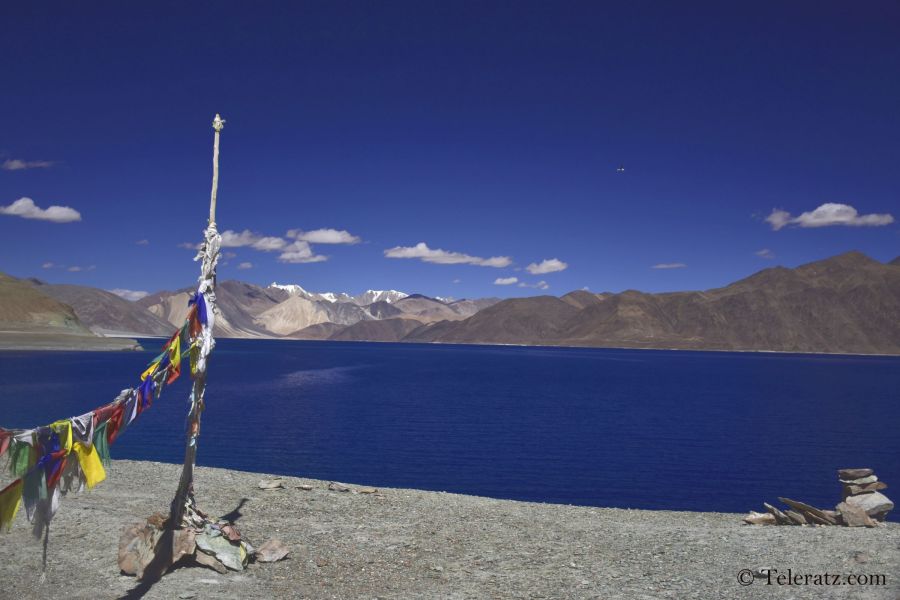
To describe the beauty of Pangong as one travels along the lake up to the point where it turns into Tibet is a futile effort through words. On a clear day, the lake can cross all thresholds of the definition of beauty in one’s mind.
Like a young vibrant maiden, it will dress up and change into various shades of blue with the passing hours of the day with the water creating youthful ripples at every touch of the wind.
Spending a day or two beside the windy shores of the lake just to stand and trying to soak in the grand vista in front of one’s eyes is an experience of a lifetime. On a full moon night, the light reflects from the ripples and the water turns silvery, creating an atmosphere that can simply mesmerize the viewer.
In contrast, the charm and glory of Tso Moriri are quite different from that of its bigger mate. Though smaller in size the lake is no less beautiful and as rich with its bluish hues as Pangong, if not more.
Like a glorious being deep into meditation, it nestles on the earth with lofty snow-capped peaks rising at one end, reflecting their glory on the blue mirror of the water.
Just a walk along the tracks meandering beside the lake can be an enriching experience for people of all ages.
Beside Pangong one feels like keeping the eyes open forever and take in as much of the beauty as possible. Whereas beside Tso Moriri, one has to close the eyes to feel and absorb or perhaps to become one with the heavenly environment.
Ladakh is said to be a dream-destination for the adventurers, photographers and many others and it is definitely so. But that is just at the superficial level.
As a person tries to look deep into the self and thereby into life, at some point all things come to a calm standstill. It is in this stage silence expresses more meaning than a thousand sounds.
In our daily lives, we see more and more sounds turn into noises. Ladakh is one such place where the beauty of silence is abundantly perceptible to the sensitive ones.

Unfortunately, touches of commercialism, the plastic footprints of loud and apathetic tourists are making inroads into this small sanctuary where life still runs hand in hand with nature.
The land that was once witness to only a few trekkers and mountaineers is now facing a massive influx of commercial tourists, many with little awareness about the environment. With the rush of tourists in there has been a massive increase in plastic waste, garbage, and carbon deposits in the once pollution-free terrain. This is specially true in the area around Leh and Pangong Tso.
Another big danger lies in the rapid increase in the number of hotels in Leh, the groundwater reserves are being hit hard. The melting glaciers are a major source of drinking water in Leh in summer but with rising temperatures, the glaciers are vanishing fast.
In addition, the natural springs and streams around the city have either vanished or have got polluted. Unless sustainable steps are taken, shortage of water is going to be a major problem in Leh.
However, the national elections, the political uncertainty in Kashmir and now the confrontation with China has cut down the flux of tourists in both 2019 and 2020. Nature must have breathed a sigh of relief at what has been an economic loss for the tourism industry.
Quite simply, it is high time to stop the destruction of the fragile eco-system in pursuit of economic gain. Long term planning , respect for natural resources and the perfect blend between economy and ecology are the needs of the day.
I hope that the true charm of Ladakh stays intact for the years to come and remains available to all those who want to look beyond the mundane and feel one with nature.
Check out our blog for more exciting travelogues.
By Suvajit Banerjee
© 2018 teleratz.com
 Teleratz
Those landscape photos are breathtaking!
LikeLike