
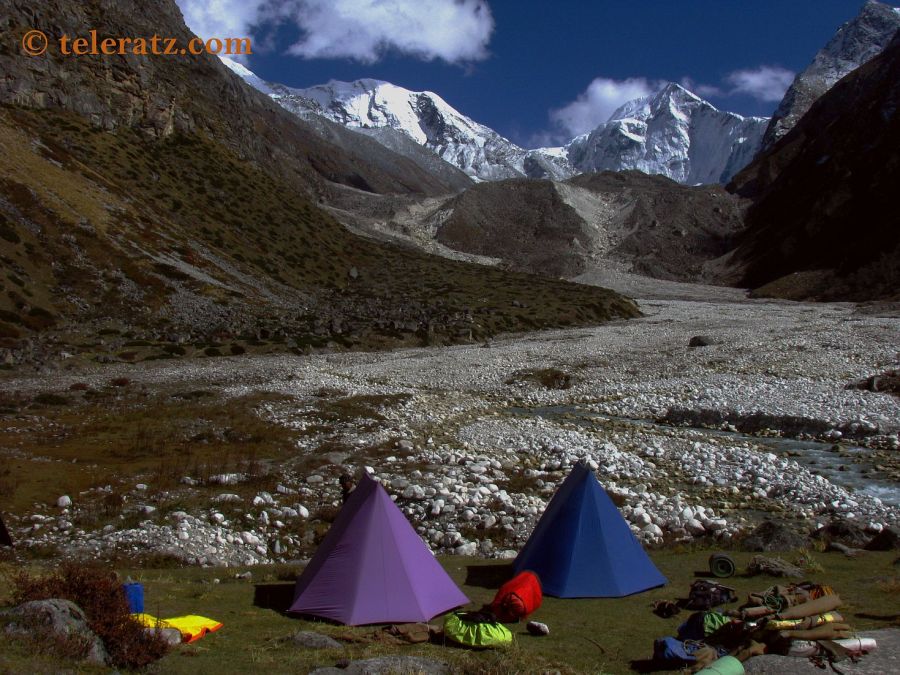
The Himalayas can overwhelm any first time visitor with their beauty and majesty. They have charmed and enchanted millions of visitors through ages and will continue to do so. Once addicted to the beauty of these highest as well as youngest mountain ranges of the world, a person will keep going back repeatedly as a seeker. While some seek peace in the spell bounding natural scenery, others try to seek something deep inside them that seem to resonate with the environment of these mountains.
One of the best ways to explore these mountains is by trekking and if you are planning for your first Himalayan trek, you need to pack the right things to make it a memorable experience. Packing for a trekking expedition is quite different from packing for normal trips, as you will be in places which are beyond the benefits and conveniences of urban life. Now, considering that you have chosen the right trail and made yourself fit enough to tackle the physical strain, we will discuss about the most important things that you need to pack and how best you can do it.
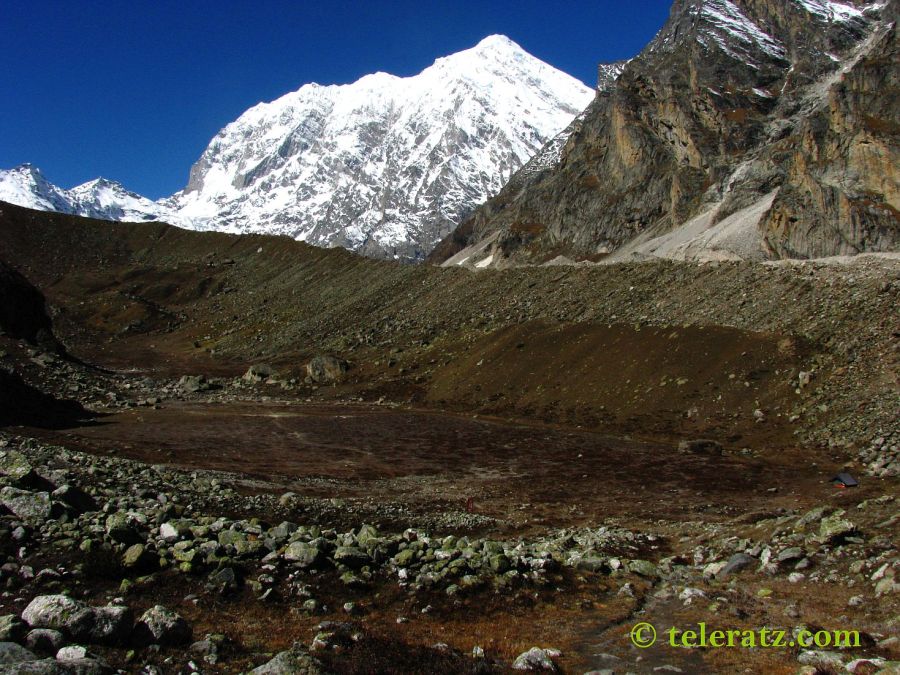
Himalayan treks can be classified into two categories; a self-organised trek and treks organised through an agency. The type of route that you will take can further divide each of these categories. Some routes in India and most routes in Nepal are tea-house treks. This means that you can find shelter and food in these tea-houses and need not to carry your own tent and supplies. In the other routes where there are no such accommodations available, you need to carry your own tent and supplies including fuel. There can also be some routes which offer shelter in the form of trekker’s huts but no food.
So when it comes to shelter, depending on type of route you can decide whether you need to carry a tent for your team or not. Based on the number of persons in your group, you can choose the number and size of tents. For e.g. for a team of four, two number of two-man tents are fine whereas for a team of five one two-man and one three-man tent will be fine. If you are going with an trekking agency, they will arrange for the tents from their end.
I will point out the main components of the personal items that you will need for a trek and discuss how you can choose them before setting out for your trip.
Sleeping bags

If you are taking the help of an agency, you can easily rent a sleeping bag and a mat from them and these are usually included in the package they are offering. Sleeping bag is a very important item and whether you are going for a tea-house trek or not, I would suggest that, you pack one for yourself. That way you will be easily able to get your own protection at night from the cold without having to depend on blankets of poor quality. If you are going on your own and don’t want to buy a new sleeping bag, look for shops in your city which rent sleeping bags and mattresses. Make sure that the quality and insulation is good enough to protect you from the below freezing temperatures at night.
Shoes
This is one important topic over which a lot has been written and discussed, so I will just stick to some basic points. Though I have seen people traversing the Gangotri glacier in flip-flops but the fact is the good shoes are definitely necessary for your trekking trips. The sneakers and running shoes that you use are not good enough to tackle the Himalayan terrain and you need to buy a show designed for treks. There are many shoes which are specifically designed for trekking, available in the stores and depending on your budget, you can choose from them. While conventional heavy shoes with thick soles and leather uppers last long, they need a break in period and often do not provide the right grip on wet and slippery surfaces.

Trekking shoes with soles made of special quality rubber like Vibram, Contagrip etc. are lighter, providing a better grip and more confidence to walk through a variety of terrains. Most of these shoes are also ready to wear right from the box and do not need a break in period as such. No matter which model you choose, you need to get the fit right so that your feet are neither too tight, nor too loose inside the shoes. The wrong fit will cause you problems while moving downhill and uphill. Applying the thumb rule of being able to put two fingers easily inside the shoe while your feet is pushed all the way forward, is one way you can try to get the right fit for you. It is also best to try your shoe with some socks on as that can make some amount of difference in the fit.
Make sure that the grooves in the soles are clean when you trek, especially while travelling over loose scree and mud. Mud and debris tend to stick into the grooves and it will be a good idea to clean them out at the end of the day. A shoe with the groves blocked, will not offer the best grip when you are trekking. A final word of advice that I will offer is that it is best not to experiment much with your shoes while going for a trek. Do some research before buying as a tried and tested brand will keep you comfortable without having to worry about blisters or a sole coming loose.
Waterproofing
You can decide to buy a shoe with a waterproof layer like Gore-Tex but do keep in mind that these models will be costlier. The shoes with a mesh and leather mix upper part gives you better breathability but they are not ideal for tackling wet and moist terrains. The waterproofing will keep your feet warm and dry when you need to cross streams and walk through snow, but it is not comfortable in the heat of lower altitudes. The quality of the waterproofing varies from brand to brand so check the reviews before buying a model.
To go high ankle or not
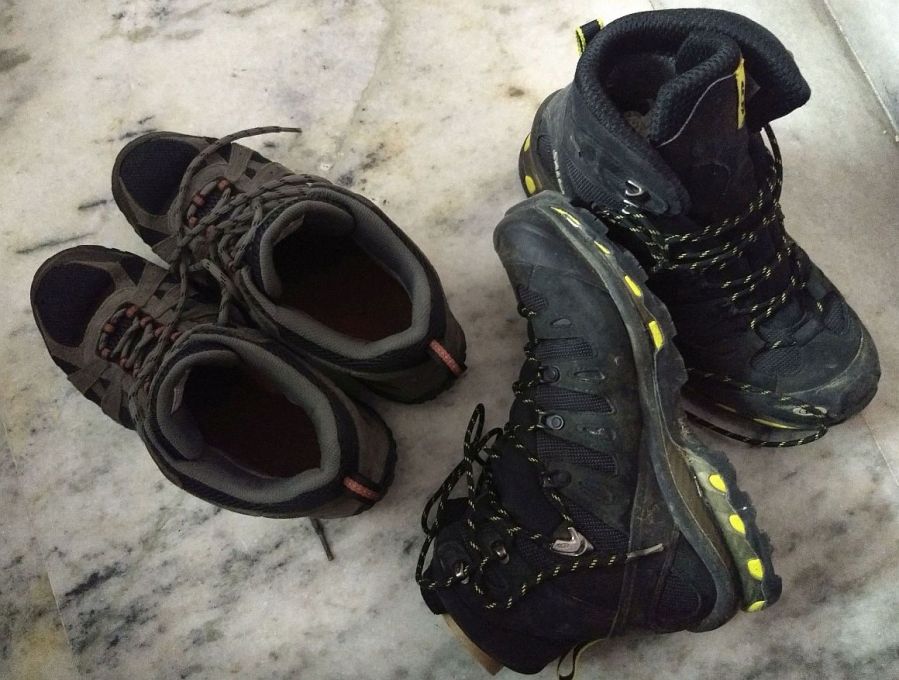
High ankle shoes have some distinct advantages over low ankle ones and since I personally use high ankle shoes while trekking, I got the chance to verify these points myself.
Firstly, they provide some additional support to your ankles making it less vulnerable to twists and sprains. Those of you with old ankle injuries can try out a high ankle shoe and feel the difference.
Secondly, while crossing small streams, you do not need to take off your shoes and carry them; unless the water is rising above your ankles. So if you are planning to buy a waterproof shoe, I will suggest that you choose a high ankle one to prevent the interiors of the shoe and socks from getting wet.
Thirdly, the high ankle shoes are very effective on muddy and slushy trails through dense forests. Mud or slush getting into your shoe can be quite discomforting and cleaning it is another cumbersome task. High ankle shoes will help you in avoiding such a scenario.
Those who are not comfortable about wearing high ankle shoes, I am sure that after a trek or two you will enjoy walking in them.
Rucksacks
This is another essential component of your trek and without a good rucksack your trip will not be comfortable. There are many varieties available in the market and each one has their own advantages and disadvantages. An intermediate rucksack of somewhere around 55-60 litres will serve you for most multi day treks. While buying, make sure that the pack is supported by metal stays in the back and the shoulder, waist and chest straps are comfortable as well as adjustable.
The outer material should be rugged and durable and preferably water resistant. Make sure that the model has a separate water proof cover for protection during heavy rains. I would also suggest that you choose a model which has a detachable hood that can be used as a small day pack for short trips. Remember to pack your rucksack evenly so that the loads are uniformly distributed and the sack remains in balance, distributing the weight not just on your shoulders but evenly across your back and hips. If you are not carrying your own rucksack, you need to take a backpack to carry some essential items with you during the trek.

Selecting the items to pack
Now that you have got hold of the main items, you need to pack your rucksack with just the right things that you need. You need to overload the pack nor do you want to miss something that you might need while into the trek. So let us take a look at the basic items that you need to carry while going on a trek.
Clothing
The clothes you pack will depend on the number of days that you will be trekking for and the altitude. Treks that will take you to high altitudes will need sufficient warm clothes. Do not pack woollen sweaters or heavy leather jackets are they are heavy, take up space and get wet easily. A windproof and waterproof light jacket is necessary, as it will serve you well in low altitudes and during rains. Trekking through high altitudes under a mid-day sun can be a hot affair and these jackets come handy in those situations too.
A heavy and durable jacket, with multiple layers is needed for the cold periods of late afternoon to early morning. The modern jackets with artificial insulation perform quite well as long as you make sure that they can be folded quite compactly. Woollen gloves and caps are small items but are necessary to provide you the right comfort. In addition, gloves can also protect your hands when you are using your hands for support while moving through some rough terrain. If your feet tends to get cold quickly, you can also pack in some woollen socks.
It is best to choose full sleeve t-shirts to wear while you are trekking as they will provide you some protection from the high altitude sun and the chilly winds. Jeans is not a good choice for trekking so choose light sports trousers for the trekking phase. If you can get hold of double-layered sports pants, they can serve you well while in the cold weather. You definitely do not need a new dress for each day of trekking, so stick to two or three sets depending on the number of days. I usually pack an extra set of trekking pants in case one gets wet or dirty. Also, make sure you pack multiple sets of underwear and socks as hygiene is very important, especially when you are sharing the tent with someone else.
Drinking water
The most important part of any trekking route and camping spots is the source of water. Once you are away from human civilization into higher altitudes, you can easily pick streams and rivers to fill your water bottles. Drinking water sources in villages are mostly safe and your guide will help you in choosing the right streams or waterfalls for filling your bottles. However, until you are not beyond all the villages and human habitations, it is best to purify river or stream water before you drink it. Small chlorine based purifiers are available and you can carry such a unit easily with you, but they do spoil the taste of the water. Straw type water filters are also a good option to use along with water bottles but they are costlier.

The next question is that how much water should you carry on your back while trekking? You can choose the size and type of bottle as per your choice. I personally carry two one-litre bottles on two sides of the rucksack, which gives me enough to last through an average day of trekking without much refilling. Depending on the altitude,the physical exertion and the availability of water in the route, your water consumption will vary. Therefore, you have to plan and manage accordingly.
Other items
There are plenty of smaller items that you need to pack when you have finished packing the clothes. The first item is a source of light, which can be a torch or a head lamp. I prefer head lamps as they keep your hands free and are very effective, especially inside the tent after sunset. Whatever you use, make sure that the batteries will last through the trek or carry adequate spare batteries. If you are moving in a small group, make sure you carry a lighter or a matchbox so that you can build a fire if needed.
Your selection of medicines to carry along is another important issue. It is best to carry all your medicines in a small pouch or box. Any personal medicine that you need must be put into the pouch. In addition, medicines for stomach ailments, allergies, nausea, vomiting and something to give you relief from pain and fever are quite essential. Some antiseptic ointment for cuts and scratches and items for basic bandaging also needs to be packed. Generally, one complete first aid box for the group should be sufficient. In case you are planning to consume Diamox tablets to adjust to altitude do note that Diamox has some discomforting side effects on some people. If you do not fall in that category you can take it as advised by the physician.
You need to carry your toiletries as per your need and one point to note here is that using a tooth paste in freezing temperatures is quite a pain especially if you have sensitive teeth. So you can think of using a mouth wash for the coldest days of the trek. The other necessary items that you need to take with you may include the following items.
Sun screen- It is a must while trekking if you do not want your skin to get damaged by UV rays and shed your skin like a snake when you have finished your trek . The higher the SPF value you choose the better protection it offers and apply liberally on the exposed skin.
Sun glasses- This is another must for protecting your eyes in a high altitude. I have seen people going snow blind after walking on the snow without eye protection and you definitely do not want to head in that direction. While using sunglasses make sure that you use a sports model and one that has Cat-3 rating. Anything below that grade is not ideal for high altitudes; so the model that you use daily in your city, might not be good at all for the mountains. If you are going for a photochromatic model, make sure you choose the quality and brand right.

Cold cream- Cracked lips are a pain in cold weather and you need a cold cream if you want to open your mouth comfortably. Pack any cream of your choice but make sure that it does not leak or get ruptured.
A waist pack or fanny pack- This is a small item but can come very handy for multi day treks. It is quite useful for storing small items within easy reach like your sun screen container, a few candies to chew on the trail and even a small camera. Do not buy a large unit that might interfere with your main pack and make sure that it is waterproof.
A multi-purpose knife– A small Swiss knife is another item that you need to carry when you are out for a trek. A sharp edge is quite effective in a wide variety of situations and to cut or saw through various items if needed.
Toilet paper– This is one item that is not much highlighted, but a roll of toilet paper is one item you cannot afford to forget while packing for a trek. While in a trek, you might be using the outdoors or the toilet of a trekker’s huts which may not be so clean and the humble toilet paper can be you saviour in such situations. Just make sure that you dispose them properly after use and do not strew them around in a clean meadow.

These are a few basic items, which are quite necessary while you are packing for the first trek. Also, discuss the details with your team members and leader before setting out for your trek. So pack your bags to go for your first Himalayan trek which will surely be a fantastic experience. Do make sure that you trek responsibly and keep the mountains clean and free from any garbage.
By Suvajit Banerjee
© 2018 telertz.com
 Teleratz
Great post
LikeLike